


HISTORY OF BULACAN
Long before the arrival of the Spaniards in the Philippines, the town of San Ildefonso was known as Bulak. The early inhabitants called this town as such because of the abundant "kapok" trees (Bulak in vernacular) growing on the hill where the town proper is now situated.
The southern part of Bulak was a barrio of San Rafael while the northern side belongs to the town of San Miguel. There were very few inhabitants numbering only about 3,000. The early inhabitants were people from neighboring towns and provinces that preferred to settle in this place because of the good prospect of agriculture.
Kapitan Julio Violago (1814) and Maria Veneracion (1825), originally from San Rafael, Bulacan, were one of the earliest settlers and foremost leaders of Bulac (now known as San Ildefonso). They are the parents of Doña Rafaela V. Violago vda. de Gonzales (1874-1963), Philanthropist and the Great Grand Matriarch of the prominent Violago Clan of San Ildefonso, San Rafael and San Jose, Nueva Ecija.
When the Spaniards came, the name Bulak was changed to Hacienda San Juan de Dios because the 155 km² of grazing and farming grounds were claimed by the friars. The people were told to pay tribute. Proceeds from the rentals were used to finance the operation of the San Juan de Dios Hospital in Manila. The Spanish friars though antagonistic towards the Filipinos, could not help admiring the beauty of the numerous natural scenarios God bestowed on the town. Because of their admiration, they changed the name Hacienda de San Juan de Dios to a more fitting one Hacienda Buenavista, a Spanish word which means beautiful scenery.
As the population grew, a chapel was constructed under the parochial jurisdiction of San Rafael. In 1879, Father Juan dela Rosa was named the first Spanish/Filipino priest of the town. He held such position up to 1911. He was responsible for changing the Bulak to San Ildefonso in honor of Alfonso XII, then the King of Spain and San Ildefonso, its Patron Saint. By the time it was given this name, a tribunal was created finally making it a town in 1887. Between the periods 1905-1906, San Ildefonso was merged with San Miguel due to its low income and inability to finance its expenditures in operating the local government.
Second World War. The Philippines was invaded by Japan in December 1941 shortly after Japan's declaration of war to the United States of America which controlled the Philippines at that time. The Japanese Imperial forces entered the municipality of San Ildefonso. The combined American-Filipino army was defeated by April 1942, but guerrilla resistance against the Japanese continued throughout the war.
1941-1945. The Gonzales-Violago Mansion, Doña Lorenza Veneracion Mansion (both mansions were across the Public Market in Poblacion) and Don Ramon Ilusorio Mansion (Bahay na Pula/Red House, in Anyatam) were occupied and served as Japanese Military Garrisons where they killed many Filipino soldiers and guerrilla fighters. First Lt. Serafin Violago Gonzales is one the heroes of the town. He died in action fighting the Japanese invaders.
San Ildefonso Massacre
Part of World War II
Date August 3, 1945
Location San Ildefonso, Bulacan
Result Filipino Victory
Belligerents
Philippines Filipino Bolomen Japan Empire of Japan
Strength
8,200 Filipino civilian bolomen 9,000 Japanese troops
Casualties and losses
144 killed 6,279 killed
3,100 wounded
August 3, 1945 was the day of the Bulaceño Bolomen. They were not properly weaponed, but instead used the Bolo machette, Knives, Spears & M1911 Pistols in the bloody massacre of Japanese Imperial forces called San Ildefonso Massacre or the Battle of San Ildefonso. The Bulaceño Bolomen invaded and entered the Japanese Military Garrisons, municipal town plaza, catholic churches and many more around the town in the municipality of San Ildefonso. They attacked and massacred Japanese Imperial forces. The Japanese were defeated, killed and massacred by the victorious Filipinos.
After the San Ildefonso Massacre in 1945 by the Filipino bolomen, the Filipino troops of the 3rd and 32nd Infantry Division, Philippine Commonwealth Army came to San Ildefonso, Bulacan. Towards the end of the war with victory on our side, the Filipino soldiers and Filipino bolomen jointly raised the Philippine War Flag.
As years went by, more and more people were induced to live in the town. The growth of population promoted the increase of income. The town became capable of meeting its expenses so it consequently ceased being a barrio of San Miguel and became once again an independent town.
The first complete history book of San Ildefonso, Bulacan, titled, "Bulac noon, San Ildefonso Ngayon" (Bulac then, San Ildefonso Now), auhored by Angelo J. and Aloma M. de los Reyes was published by the Catholic Parish of the town in the second half of the 1980s. It is written in Pilipino (Tagalog-based, National Language of the Philippines). Copyright-owners are the Parish and the authors (c/o SynerAide Publications, 28 Tindalo St., T&CEVillage, Mayamot, Antipolo City, Philippines.


 GETTING THERE
me and my friends decided to met at EDSA crossing
from there we took a bus going to fairview
P30 bus fare each and advise to drop us off to la mesa
its a street going to the eco park and there are tricycle going there
tricycle fare - P10
GETTING THERE
me and my friends decided to met at EDSA crossing
from there we took a bus going to fairview
P30 bus fare each and advise to drop us off to la mesa
its a street going to the eco park and there are tricycle going there
tricycle fare - P10

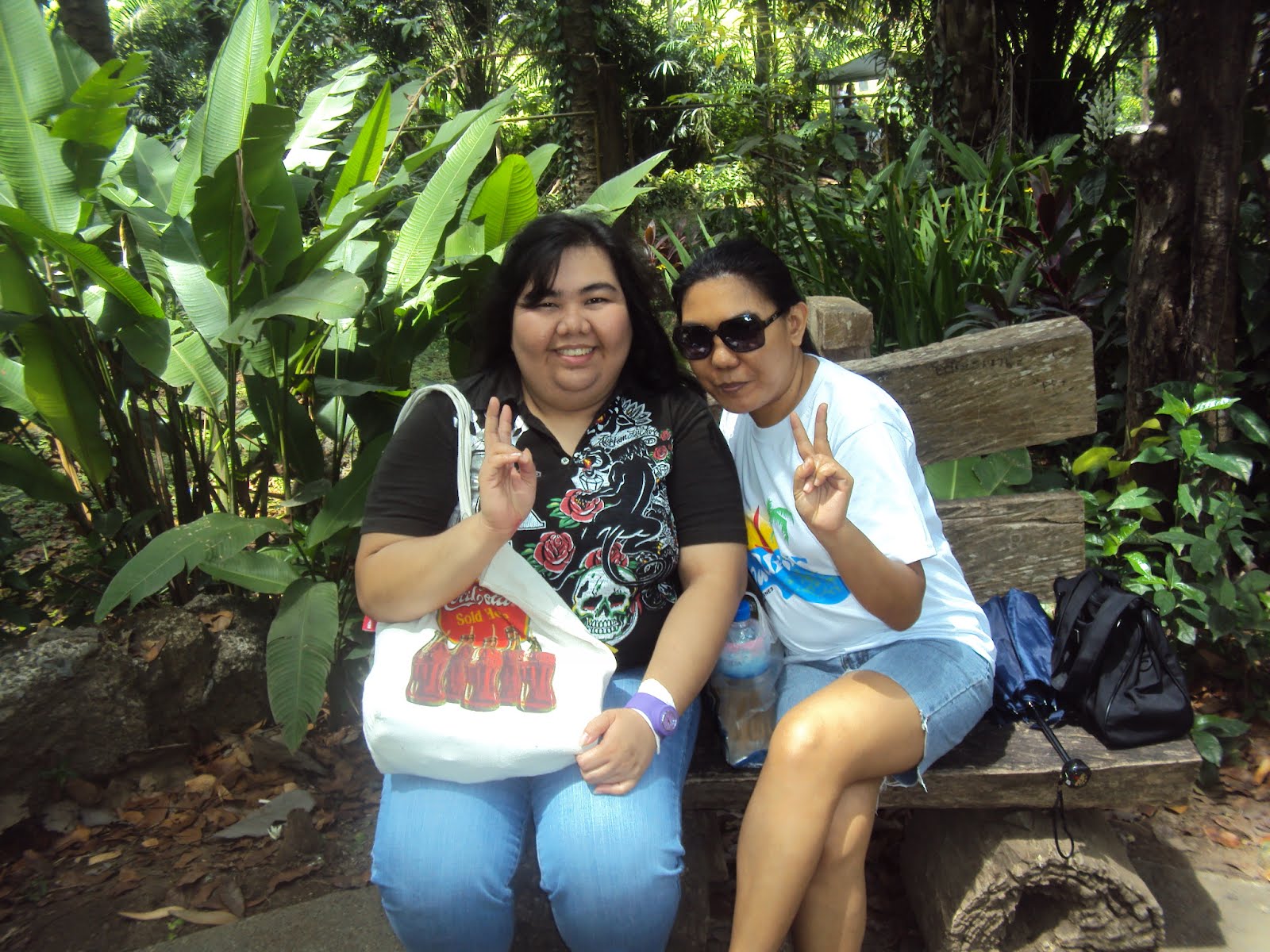


 The Ecopark spans 33 hectares, 10 of which is already operational. It lies within the La Mesa Watershed which measures 2,700 hectares and is straddled by Rizal Province, Caloocan, Marikina, and Quezon City. There’s even more greenery as one enters the park proper. This is no surprise as rare species of plants and animals are aplenty. Fifty pesos gives access to all the park has to offer from 8 AM to 5 PM all days of the week. Those inside before 5 in the afternoon can stay until 6 PM.
eco park long stairs The swimming pool that is in its golden year is the centerpiece, which also makes the park double as a resort since it attracts a lot of swimmers daily, save for Monday when it is scheduled for cleaning.Hikers would find it a challenge (or not) the stairway with more than 100 steps.
Bikes’ rental fees vary; mountain bikes cost P70 to rent, sidecars are between P70-80, go karts at P60. The cheapest are the kiddie bikes, which can be rented for P50.Camping sites abound. One may set up a tent or a simple picnic mats under the umbrella of trees with big barks. There are also playgrounds for kids.
eco park main wayThe Orchidarium and the Shell Flower Terraces are evocative of the Tuscan countryside or the Austrian hillsides. You’d almost hear strains of “the hills are alive with the sound of music” like Maria and the Trapp Family Singers would come bursting through any minute.
It’s more quiet at the pond, where families can fish minus the boats. The boats may be rented for P100 and are to be found at the lagoon, which is some ways away. One has to get out of the park and walk down to the dock to go boating. The number of passengers is limited to four adults or any number of kids the equivalent of that.
eco park terracesThe lagoon is less than four feet deep, shallow enough to erase worries about drowning should the boat turn turtle. Still, the younger boaters are strapped with life vests and it’s reassuring enough that lifesavers are on the lookout at all times. This boating lagoon is still clear and less odoriferous, despite its proximity to the Payatas dumpsite (don’t worry, it’s not in view). The lagoon is also easier on the eyes since trees bound it on almost all sides, and the sun is able to make prismatic reflections on the water.
eco park rivereco park boating
A weekend jaunt to the La Mesa Ecopark is suggested, although going there on a weekday would actually be more serene.
The Ecopark spans 33 hectares, 10 of which is already operational. It lies within the La Mesa Watershed which measures 2,700 hectares and is straddled by Rizal Province, Caloocan, Marikina, and Quezon City. There’s even more greenery as one enters the park proper. This is no surprise as rare species of plants and animals are aplenty. Fifty pesos gives access to all the park has to offer from 8 AM to 5 PM all days of the week. Those inside before 5 in the afternoon can stay until 6 PM.
eco park long stairs The swimming pool that is in its golden year is the centerpiece, which also makes the park double as a resort since it attracts a lot of swimmers daily, save for Monday when it is scheduled for cleaning.Hikers would find it a challenge (or not) the stairway with more than 100 steps.
Bikes’ rental fees vary; mountain bikes cost P70 to rent, sidecars are between P70-80, go karts at P60. The cheapest are the kiddie bikes, which can be rented for P50.Camping sites abound. One may set up a tent or a simple picnic mats under the umbrella of trees with big barks. There are also playgrounds for kids.
eco park main wayThe Orchidarium and the Shell Flower Terraces are evocative of the Tuscan countryside or the Austrian hillsides. You’d almost hear strains of “the hills are alive with the sound of music” like Maria and the Trapp Family Singers would come bursting through any minute.
It’s more quiet at the pond, where families can fish minus the boats. The boats may be rented for P100 and are to be found at the lagoon, which is some ways away. One has to get out of the park and walk down to the dock to go boating. The number of passengers is limited to four adults or any number of kids the equivalent of that.
eco park terracesThe lagoon is less than four feet deep, shallow enough to erase worries about drowning should the boat turn turtle. Still, the younger boaters are strapped with life vests and it’s reassuring enough that lifesavers are on the lookout at all times. This boating lagoon is still clear and less odoriferous, despite its proximity to the Payatas dumpsite (don’t worry, it’s not in view). The lagoon is also easier on the eyes since trees bound it on almost all sides, and the sun is able to make prismatic reflections on the water.
eco park rivereco park boating
A weekend jaunt to the La Mesa Ecopark is suggested, although going there on a weekday would actually be more serene.


 HISTORY OF BULACAN
Long before the arrival of the Spaniards in the Philippines, the town of San Ildefonso was known as Bulak. The early inhabitants called this town as such because of the abundant "kapok" trees (Bulak in vernacular) growing on the hill where the town proper is now situated.
The southern part of Bulak was a barrio of San Rafael while the northern side belongs to the town of San Miguel. There were very few inhabitants numbering only about 3,000. The early inhabitants were people from neighboring towns and provinces that preferred to settle in this place because of the good prospect of agriculture.
Kapitan Julio Violago (1814) and Maria Veneracion (1825), originally from San Rafael, Bulacan, were one of the earliest settlers and foremost leaders of Bulac (now known as San Ildefonso). They are the parents of Doña Rafaela V. Violago vda. de Gonzales (1874-1963), Philanthropist and the Great Grand Matriarch of the prominent Violago Clan of San Ildefonso, San Rafael and San Jose, Nueva Ecija.
When the Spaniards came, the name Bulak was changed to Hacienda San Juan de Dios because the 155 km² of grazing and farming grounds were claimed by the friars. The people were told to pay tribute. Proceeds from the rentals were used to finance the operation of the San Juan de Dios Hospital in Manila. The Spanish friars though antagonistic towards the Filipinos, could not help admiring the beauty of the numerous natural scenarios God bestowed on the town. Because of their admiration, they changed the name Hacienda de San Juan de Dios to a more fitting one Hacienda Buenavista, a Spanish word which means beautiful scenery.
As the population grew, a chapel was constructed under the parochial jurisdiction of San Rafael. In 1879, Father Juan dela Rosa was named the first Spanish/Filipino priest of the town. He held such position up to 1911. He was responsible for changing the Bulak to San Ildefonso in honor of Alfonso XII, then the King of Spain and San Ildefonso, its Patron Saint. By the time it was given this name, a tribunal was created finally making it a town in 1887. Between the periods 1905-1906, San Ildefonso was merged with San Miguel due to its low income and inability to finance its expenditures in operating the local government.
Second World War. The Philippines was invaded by Japan in December 1941 shortly after Japan's declaration of war to the United States of America which controlled the Philippines at that time. The Japanese Imperial forces entered the municipality of San Ildefonso. The combined American-Filipino army was defeated by April 1942, but guerrilla resistance against the Japanese continued throughout the war.
1941-1945. The Gonzales-Violago Mansion, Doña Lorenza Veneracion Mansion (both mansions were across the Public Market in Poblacion) and Don Ramon Ilusorio Mansion (Bahay na Pula/Red House, in Anyatam) were occupied and served as Japanese Military Garrisons where they killed many Filipino soldiers and guerrilla fighters. First Lt. Serafin Violago Gonzales is one the heroes of the town. He died in action fighting the Japanese invaders.
San Ildefonso Massacre
Part of World War II
Date August 3, 1945
Location San Ildefonso, Bulacan
Result Filipino Victory
Belligerents
Philippines Filipino Bolomen Japan Empire of Japan
Strength
8,200 Filipino civilian bolomen 9,000 Japanese troops
Casualties and losses
144 killed 6,279 killed
3,100 wounded
August 3, 1945 was the day of the Bulaceño Bolomen. They were not properly weaponed, but instead used the Bolo machette, Knives, Spears & M1911 Pistols in the bloody massacre of Japanese Imperial forces called San Ildefonso Massacre or the Battle of San Ildefonso. The Bulaceño Bolomen invaded and entered the Japanese Military Garrisons, municipal town plaza, catholic churches and many more around the town in the municipality of San Ildefonso. They attacked and massacred Japanese Imperial forces. The Japanese were defeated, killed and massacred by the victorious Filipinos.
After the San Ildefonso Massacre in 1945 by the Filipino bolomen, the Filipino troops of the 3rd and 32nd Infantry Division, Philippine Commonwealth Army came to San Ildefonso, Bulacan. Towards the end of the war with victory on our side, the Filipino soldiers and Filipino bolomen jointly raised the Philippine War Flag.
As years went by, more and more people were induced to live in the town. The growth of population promoted the increase of income. The town became capable of meeting its expenses so it consequently ceased being a barrio of San Miguel and became once again an independent town.
The first complete history book of San Ildefonso, Bulacan, titled, "Bulac noon, San Ildefonso Ngayon" (Bulac then, San Ildefonso Now), auhored by Angelo J. and Aloma M. de los Reyes was published by the Catholic Parish of the town in the second half of the 1980s. It is written in Pilipino (Tagalog-based, National Language of the Philippines). Copyright-owners are the Parish and the authors (c/o SynerAide Publications, 28 Tindalo St., T&CEVillage, Mayamot, Antipolo City, Philippines.
HISTORY OF BULACAN
Long before the arrival of the Spaniards in the Philippines, the town of San Ildefonso was known as Bulak. The early inhabitants called this town as such because of the abundant "kapok" trees (Bulak in vernacular) growing on the hill where the town proper is now situated.
The southern part of Bulak was a barrio of San Rafael while the northern side belongs to the town of San Miguel. There were very few inhabitants numbering only about 3,000. The early inhabitants were people from neighboring towns and provinces that preferred to settle in this place because of the good prospect of agriculture.
Kapitan Julio Violago (1814) and Maria Veneracion (1825), originally from San Rafael, Bulacan, were one of the earliest settlers and foremost leaders of Bulac (now known as San Ildefonso). They are the parents of Doña Rafaela V. Violago vda. de Gonzales (1874-1963), Philanthropist and the Great Grand Matriarch of the prominent Violago Clan of San Ildefonso, San Rafael and San Jose, Nueva Ecija.
When the Spaniards came, the name Bulak was changed to Hacienda San Juan de Dios because the 155 km² of grazing and farming grounds were claimed by the friars. The people were told to pay tribute. Proceeds from the rentals were used to finance the operation of the San Juan de Dios Hospital in Manila. The Spanish friars though antagonistic towards the Filipinos, could not help admiring the beauty of the numerous natural scenarios God bestowed on the town. Because of their admiration, they changed the name Hacienda de San Juan de Dios to a more fitting one Hacienda Buenavista, a Spanish word which means beautiful scenery.
As the population grew, a chapel was constructed under the parochial jurisdiction of San Rafael. In 1879, Father Juan dela Rosa was named the first Spanish/Filipino priest of the town. He held such position up to 1911. He was responsible for changing the Bulak to San Ildefonso in honor of Alfonso XII, then the King of Spain and San Ildefonso, its Patron Saint. By the time it was given this name, a tribunal was created finally making it a town in 1887. Between the periods 1905-1906, San Ildefonso was merged with San Miguel due to its low income and inability to finance its expenditures in operating the local government.
Second World War. The Philippines was invaded by Japan in December 1941 shortly after Japan's declaration of war to the United States of America which controlled the Philippines at that time. The Japanese Imperial forces entered the municipality of San Ildefonso. The combined American-Filipino army was defeated by April 1942, but guerrilla resistance against the Japanese continued throughout the war.
1941-1945. The Gonzales-Violago Mansion, Doña Lorenza Veneracion Mansion (both mansions were across the Public Market in Poblacion) and Don Ramon Ilusorio Mansion (Bahay na Pula/Red House, in Anyatam) were occupied and served as Japanese Military Garrisons where they killed many Filipino soldiers and guerrilla fighters. First Lt. Serafin Violago Gonzales is one the heroes of the town. He died in action fighting the Japanese invaders.
San Ildefonso Massacre
Part of World War II
Date August 3, 1945
Location San Ildefonso, Bulacan
Result Filipino Victory
Belligerents
Philippines Filipino Bolomen Japan Empire of Japan
Strength
8,200 Filipino civilian bolomen 9,000 Japanese troops
Casualties and losses
144 killed 6,279 killed
3,100 wounded
August 3, 1945 was the day of the Bulaceño Bolomen. They were not properly weaponed, but instead used the Bolo machette, Knives, Spears & M1911 Pistols in the bloody massacre of Japanese Imperial forces called San Ildefonso Massacre or the Battle of San Ildefonso. The Bulaceño Bolomen invaded and entered the Japanese Military Garrisons, municipal town plaza, catholic churches and many more around the town in the municipality of San Ildefonso. They attacked and massacred Japanese Imperial forces. The Japanese were defeated, killed and massacred by the victorious Filipinos.
After the San Ildefonso Massacre in 1945 by the Filipino bolomen, the Filipino troops of the 3rd and 32nd Infantry Division, Philippine Commonwealth Army came to San Ildefonso, Bulacan. Towards the end of the war with victory on our side, the Filipino soldiers and Filipino bolomen jointly raised the Philippine War Flag.
As years went by, more and more people were induced to live in the town. The growth of population promoted the increase of income. The town became capable of meeting its expenses so it consequently ceased being a barrio of San Miguel and became once again an independent town.
The first complete history book of San Ildefonso, Bulacan, titled, "Bulac noon, San Ildefonso Ngayon" (Bulac then, San Ildefonso Now), auhored by Angelo J. and Aloma M. de los Reyes was published by the Catholic Parish of the town in the second half of the 1980s. It is written in Pilipino (Tagalog-based, National Language of the Philippines). Copyright-owners are the Parish and the authors (c/o SynerAide Publications, 28 Tindalo St., T&CEVillage, Mayamot, Antipolo City, Philippines.


